
Experience and Trust are not content signals, while speed, security, uptime, and a tidy architecture are. This is how tech uplifts E E A T.
When you dive into SEO, you keep bumping into four capital letters: E-E-A-T, which stands for Experience, Expertise, Authoritativeness, and Trustworthiness. These guidelines, laid out in the search quality evaluator guidelines, are the gold standard for judging page quality. However, most conversations stop at writing better posts, adding expert quotes, and bragging about years in the field. Yes, those tips help. In short, polishing the paint on a rusty car looks nice, but the chassis stays shaky. Ignoring the technical side pretends search engines don’t care how content is delivered.
What is E-E-A-T
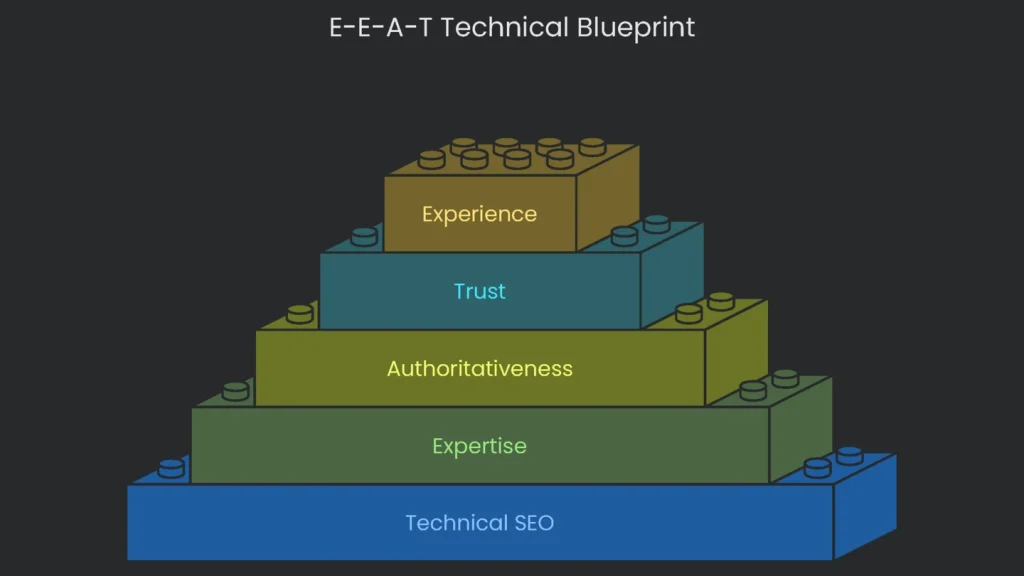
Content is the what; the technical stuff is the how and why. Therefore, code, server settings, and internal links are not invisible paperwork. They broadcast trust to users and search engines. For example, a fast page on a secure server feels like a trusted library. A slow, popup-filled mess feels like a sketchy gas station restroom. Consequently, E-E-A-T gets a boost not only from expert paragraphs but also from header tags that make pages scannable, structured data that confirms credentials, and a sitemap that shows crawlers where the real stuff lives.
To wrap your head around E-E-A-T, link the role of Google’s human raters to the algorithms that grant page-one spots. The Quality Rater Guidelines (QRG) work as a playbook for part-timers who define “high quality.” Next, those raters crawl “About” pages, read author bios, and map the experts behind the text. As a result, their insights shape patterns that machine learning models memorize. In other words, algorithms chase machine-readable footprints of the signals raters flagged: proof, biography, and trustworthiness.
Most of the market fixates on creating words. They miss the hidden signals—the technical bones that convert vague trust into data a machine understands. Therefore, the right technical SEO supplies those bones and translates judgment into numeric, machine language. Turning E-E-A-T from theory to practice needs a technical blueprint for each letter. For Expertise, insist on authorship that outranks the page. For Authoritativeness, wrap data with valid schema and solid expert linking. For Trust, serve HTTPS and guarantee speed on every device. For Experience, adjust crawl settings so Google sees on-the-spot user data and refreshed media. Every deployed command and every validated schema becomes a flag that says, “We walked the talk on trust.” Once all four signals light up together, the blueprint crystallizes into a map that appeals to search engines and real visitors alike. Consequently, keeping them in sync turns E-E-A-T into a reliable foundation both can recognize.
Experience & Expertise
Why Authors Matter
Google wants quick answers to “Who, How, and Why,” and it is picky about the “Who.” In a sea of copycats, showing the real person behind the content hooks readers and robots. Therefore, make authors visible and verifiable.
Author Pages: More Muscle Than Muscle
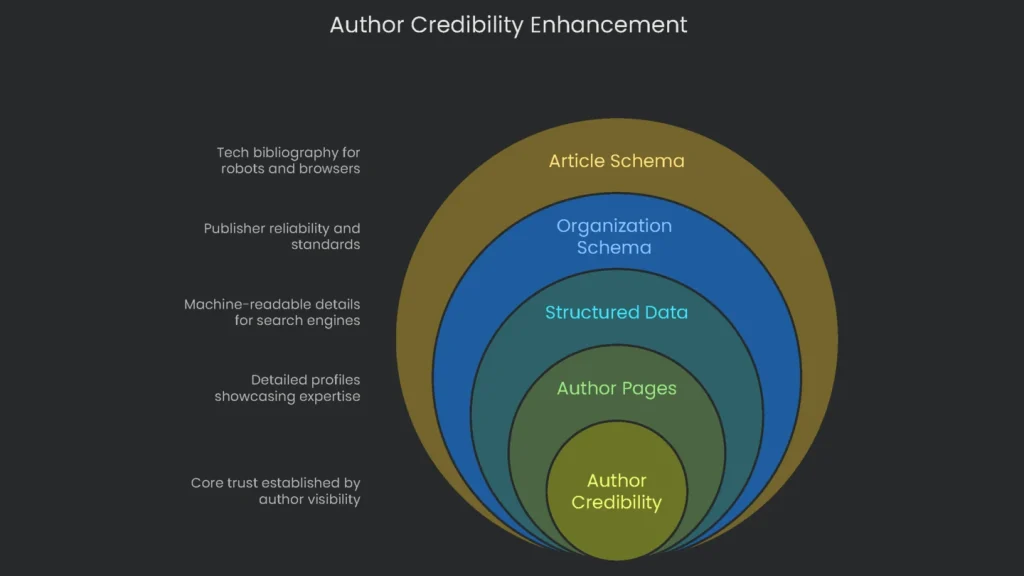
A name above the headline invites doubt; an author page makes the claim binding. Forget “two sentences and a headshot.” These pages are credibility power-ups. Each needs a crawl-friendly address like /author/jane-doe/. Next, the page should show certifications, diplomas, and frontline years. A full, digestible list of pieces the author has published turns them into a real entity with proof. Consequently, links between those pieces and the profile create clear tracks that search engines follow with confidence.
Using Structured Data to Make Your One-Page Profile Stand Out to Search Engines
When you add structured data to an author bio, you turn an untidy sketch into an ironclad résumé search engines trust. The Schema “Person” standard is the preferred vehicle because it quietly announces that the words belong to a specialist. Simply stuffing a bio with résumé facts won’t do. Instead, markup pulls machine-readable details into the page so engines see titles and connections that prove authority.
The essential details about the author fall under “Person.” Start with these:
jobTitle: “Senior Medical Researcher,” which signals rank and primary role.worksFor: a hyperlink to the institution the author identifies with.alumniOf: the university that awarded the relevant degree.hasCredential: a reference to key letters, such as “M.D.” or “Ph.D.”award: the title of relevant recognitions from professional organizations.knowsAbout: a list of focused topics the author has mastered.
The star property is sameAs. It bridges to verified profiles—LinkedIn, a maintained personal site, or a sturdy Wikipedia page. As a result, Google sees that the content belongs to the same person already counted and trusted elsewhere.
Organization schema helps search engines see the publisher as a reliable referee. Publishers can add it to the homepage or the About page. Therefore, include the legal name, an official logo, a contact point, and a verified address. The sameAs property then connects to respected profiles like Wikipedia, Crunchbase, or the BBB. For publishers, the publishingPrinciples property is key; it links to a page that states editorial standards—“we are open about our process.”
When schema is in place, it forms a tight chain of trust. Next, the Article schema can elevate the setup by bringing a Person entity for the author and an Organization entity for the publisher. Consequently, this acts like a tech bibliography both robots and browsers treat as proof.
Authoritativeness
What Authority Looks Like in Code
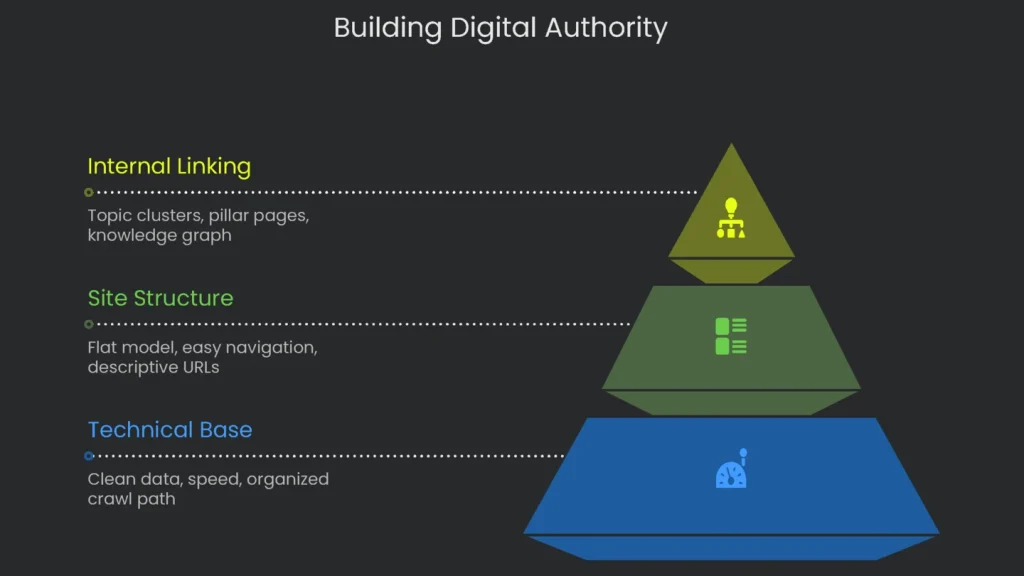
Authoritativeness is about being the go-to source in your vertical. While links and mentions grow outside your walls, the technical base inside your site speaks loudly. Therefore, clean structured data, quick speed, and an organized crawl path work as silent signals that reinforce top status.
Site Setup Talks Authority Before You Do
Think of layout as body language. A neat, easy structure whispers competence. However, a cluttered maze yells “I’m lost!” and undermines trust. SEO pros push a “flat” model: every important page within four clicks of the homepage. The shorter the journey, the better. As a result, bots gather value quickly and spread it across the site. Keep important pages easy to reach so link equity flows and confirms Google should pay attention. Letting content lurk four levels down screams “ignore me.” Finally, mirror that logic in your URLs. Descriptive paths stay memorable and meaningful. For example, https://example.com/services/technical-seo/ tells both reader and crawler what to expect and where they are.
How Internal Linking Proves You Know Your Stuff
A topic cluster is more than an ideation trick; it is a visible map of expertise. Start with a pillar page that covers a big topic well. Next, branch into smaller cluster pages for each subtopic. Crucially, each cluster links back to the pillar, and the pillar links to key clusters. Consequently, internal links do more than pass SEO value; they weave a blueprint of your knowledge. Search engines read the pattern and conclude, “This site understands the topic inside and out.” In short, you build a mini knowledge graph: the pillar stands like a lighthouse, clusters serve as beacons, and links become the roads between them.
Trustworthiness
Why Trust Comes First
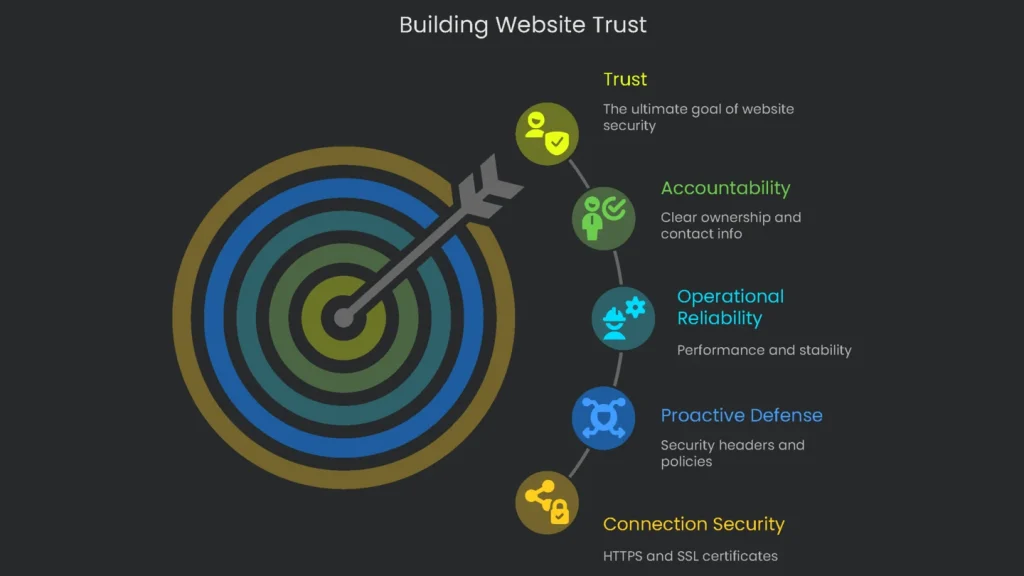
In E-E-A-T, trust is the star. According to Google’s guidelines, a page can look expert and still fail if it is untrustworthy. Therefore, technical health is the ground that trust stands on. You can load a page with citations, but if the tech is crumbling, trust breaks. Fixing trust issues must start there.
HTTPS and Security as Trust Signals
A secure connection is the bedrock of online trust, as Google noted in 2014. Yes, it can help scores. However, the real win is user confidence, because modern browsers mark pages without HTTPS as “Not Secure.” Applying an SSL/TLS certificate flips the padlock and starts trust building. Next, add HTTP security headers. Think of these as traffic controllers telling browsers how to avoid common crash sites.
Here are a few headers you should add:
- HTTP Strict Transport Security (HSTS): A “no shortcuts” order that forces HTTPS and locks the back door against downgrade attacks.
- Content Security Policy (CSP): A preset allowlist for content sources so rogue scripts cannot crash the party.
- X-Frame-Options: A gate that blocks other sites from embedding your pages, helping prevent clickjacking.
Consequently, secure headers promise protection for visitors and add a visible seal of trust to your site.
Professionalism and Core Web Vitals
Performance speaks volumes about care. A sluggish page or frequent crashes signal neglect. Therefore, Core Web Vitals turn user feelings into measurable data.
- Largest Contentful Paint (LCP) checks how fast the main image or text appears. If it lingers, visitors fear the site is broken.
- Interaction to Next Paint (INP) records how fast the page reacts to clicks. Slow reactions feel like a freeze and push people away.
- Cumulative Layout Shift (CLS) tracks surprise jumps while elements load. Too much shifting breeds distrust and accidental clicks.
As a result, tuning these scores turns a website into a steady, professional partner when every click requires trust.
About & Contact Pages as Trust Markers
Accountability builds trust. A site that hides its owners looks suspect. Therefore, clear “About Us” and “Contact Us” pages are not optional. Make sure visitors can find these links in the main navigation or footer. Search engines and humans read them as a final stamp of credibility. If something is off, a name and face are ready to explain.
These signals stack in layers. The base is Connection Security (the padlock). Next is Proactive Defense (security headers). Then comes Operational Reliability (Core Web Vitals). Finally, Accountability crowns the stack (“About” and “Contact”). A crack below weakens everything above. Consequently, even amazing content looks suspect on a site that is insecure, slow, or anonymous.
Your Technical E-E-A-T Checklist
How to Use This Checklist
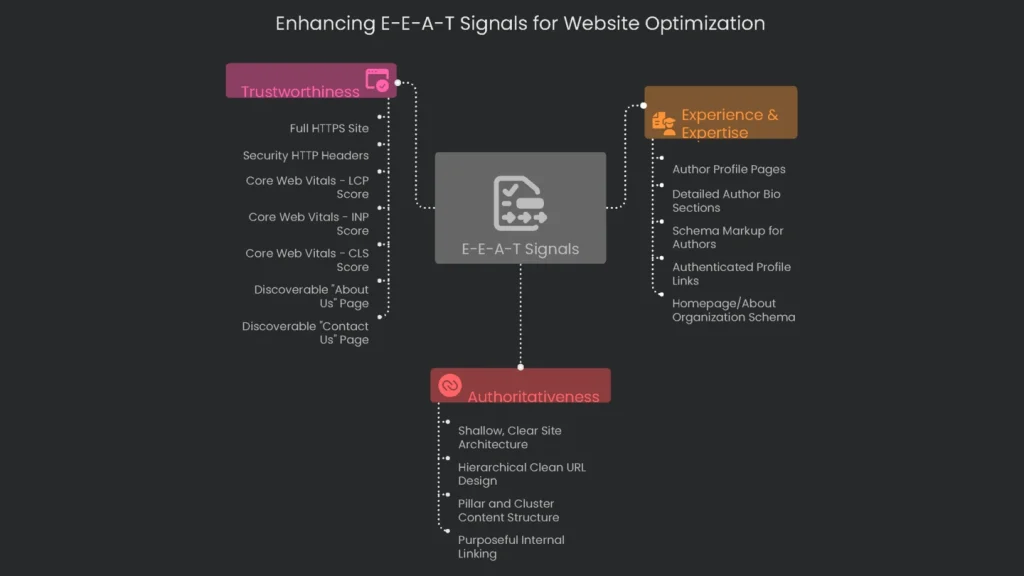
This checklist flips talk into action. Therefore, review your technical bones, set priorities, and fix the highest-impact gaps first to send strong E-E-A-T signals.
Checklist Table
| Technical Element | Key E-E-A-T Signal | Status (Yes/No/Partial) | Priority Task |
| Experience & Expertise | |||
| Author Profile Pages (Indexed) | Experience, Expertise | Create true, indexable /author/ profiles for every creator. | |
| Detailed Author Bio Sections | Experience, Expertise | Enhance bios with exact degrees, specializations, and relevant work. | |
| Schema Markup for Authors | Expertise, Trustworthiness | Embed Person schema for job title, employer, and school. | |
| Authenticated Profile Links | Expertise, Authoritativeness | Use sameAs to link to LinkedIn, Wikipedia, or comparable sites. | |
| Homepage/About Organization Schema | Authoritativeness, Trustworthiness | Implement Organization schema with name, logo, contact, and sameAs. | |
| Authoritativeness | |||
| Shallow, Clear Site Architecture | Authoritativeness | Verify that key content is accessible in less than four clicks. | |
| Hierarchical Clean URL Design | Authoritativeness | Refine URLs to mirror the site’s content hierarchy (/category/topic). | |
| Pillar and Cluster Content Structure | Authoritativeness, Expertise | Choose major topics and group content into pillar and related clusters. | |
| Purposeful Internal Linking | Authoritativeness | Ensure clusters link to the pillar and the pillar links back to key clusters. | |
| Trustworthiness | |||
| Full HTTPS Site | Trustworthiness | Migrate all pages to HTTPS and resolve any mixed content issues. | |
| Security HTTP Headers | Trustworthiness | Configure the server to add critical security headers (HSTS, CSP). | |
| Core Web Vitals – LCP Score | Trustworthiness | Use smaller images, speed up server response, and load non-important scripts later. | |
| Core Web Vitals – INP Score | Trustworthiness | Get rid of extra third-party scripts and fine-tune code for snappier user reactions. | |
| Core Web Vitals – CLS Score | Trustworthiness | Define dimensions for images and leave space for ads to stop unexpected jumps on the page. | |
| Discoverable “About Us” Page | Trustworthiness, Authoritativeness | Link to a complete “About Us” page in the main site menu or footer. | |
| Discoverable “Contact Us” Page | Trustworthiness | Show easy-to-read contact details on a prominently listed page. |
Content and Code Together for Trust
Why Delivery Matters
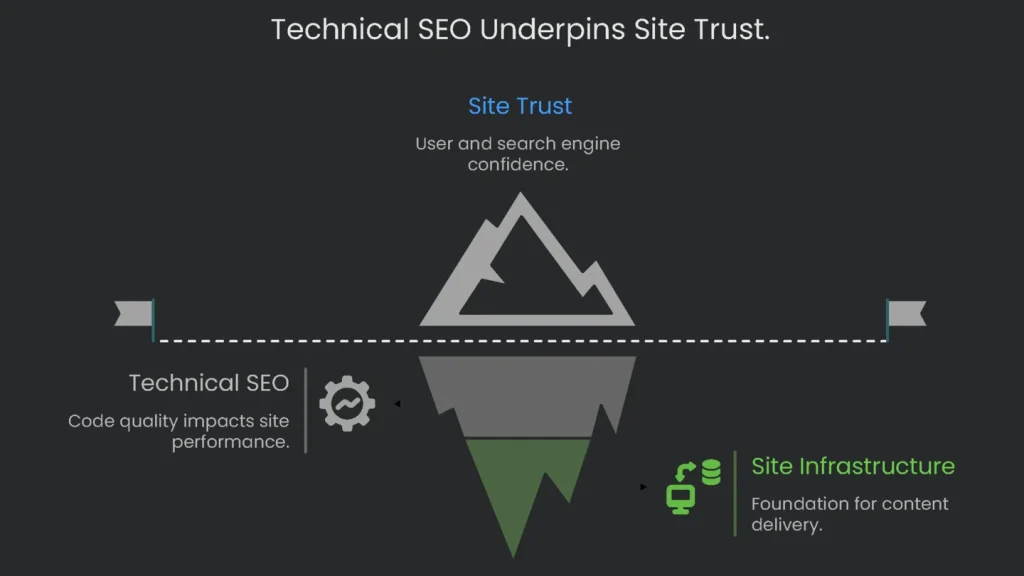
This piece argues that E-E-A-T applies to the whole site, not only text. Hiding technical details behind “not content” misleads builders. Therefore, technical SEO is the ground layer that supports—or undermines—the trust behind any text. Picture an expert speaker delivering the same talk twice. The first time, the room is bright and well-equipped. The second time, lights flicker in a creaky hall. The words don’t change, yet attention and confidence do.
Craftsmanship Across Layers
Like a stage, a site needs a base that feels solid. The content is the speech; the code is the steel. When the code is clean, the air ducts safe, and the doors secure, everything works in harmony. Consequently, pages load fast, links point the right way, and content unfolds without distraction. Visitors and search engines can trust every layer. In short, that is the core of E-E-A-T: an act of craftsmanship where every byte and every comma serve the same mission—trust.
Implementation steps
- Mark up author bios and Organization/Person schema with verified details.
- Boost trust signals: deploy HTTPS, ensure uptime, set strict security headers, and write clear privacy pages.
- Provide proof: share case studies, raw data, screenshots, and clear change logs.
- Lift accessibility and speed—the better the UX, the steadier the trust.
- Keep review pages up to date and reply to feedback with openness
Frequently Asked Questions
How does tech impact E-E-A-T?
Speed, uptime, security, and a tidy code structure help users see your site as credible.
Does HTTPS matter?
Yes, it signals that the site is secure, providing a basic level of trust.
Should I mark up authors?
Yup—use Person/Organization schema with bylines that won’t mislead.
Does downtime mess with E‑E‑A‑T?
Yup—lost trust piles up fast. Keep a dashboard.
Any accessibility connections?
Totally—sites that are usable show real quality signals to everyone.