
With the rise of AI answer engines, GEO stands for Grouping, structuring, ordering the content, data, and time stamp to ensure proper citation and summary without self-clicking cannibalization.
The Next Big Thing in Search
Digital marketing is about to turn upside down in a way that rivals the day Google first hit the scene. The rollout of Search AI Overviews and similar generative AI tools is far beyond a regular upgrade—it rewrites the playbook for how brands meet customers online. Already, we’re seeing the first big statistics. Some sites have watched their organic traffic for informational pages plummet by 60% as AI boxes steal the spotlight atop search results. These AI-generated summaries speed up the “zero-click search” trend, where users get their answers and never step inside a single website.
Why AI Overviews Matter Now
Everything is moving at lightning speed. By early 2025, AI Overviews will answer 13%+ of all queries and then climb higher, especially for the facts and how-tos that help a brand get noticed first. Therefore, marketers can’t rely on play-it-safe tactics. They need a playbook that matches the change. That playbook is Generative Engine Optimization, which we’ll call GEO.
Think of GEO as the art of serving up your website’s information so that both search engines and the AI behind them nod in approval. You’re not just making the page nice for people anymore. Instead, you’re creating a snack an AI can “eat” and repeat as a smarter, shorter, or one-sentence answer. You might hear GEO called AEO, AIO, or LLMO. However, the folks behind the curtain know that GEO best covers the scoreboard, making your brand the go-to adviser for the bot that answers most questions without handing over a link.
Convert Clicks into Spoken Praise
For GEO to click, you first need to buy a new map. The old “get on page one with a blue link” playbook is now thrift-store pricing. Consequently, your strategy must shift.
- Old SEO: The mission was to splat your blue link at the top of the search page. You counted the people who clicked to reach your home page. Then you basked in metrics like rank tallies, impression volume, and click-through rate.
- Generative Engine Optimization (GEO): Picture your brand’s info featured as the trusted reference inside the AI-powered answer itself. Your mission shifts from getting the click to scoring the citation. Ironically, the real “user” is the AI, which translates your page into a neat summary the human then reads.
Ranking Still Drives Citations
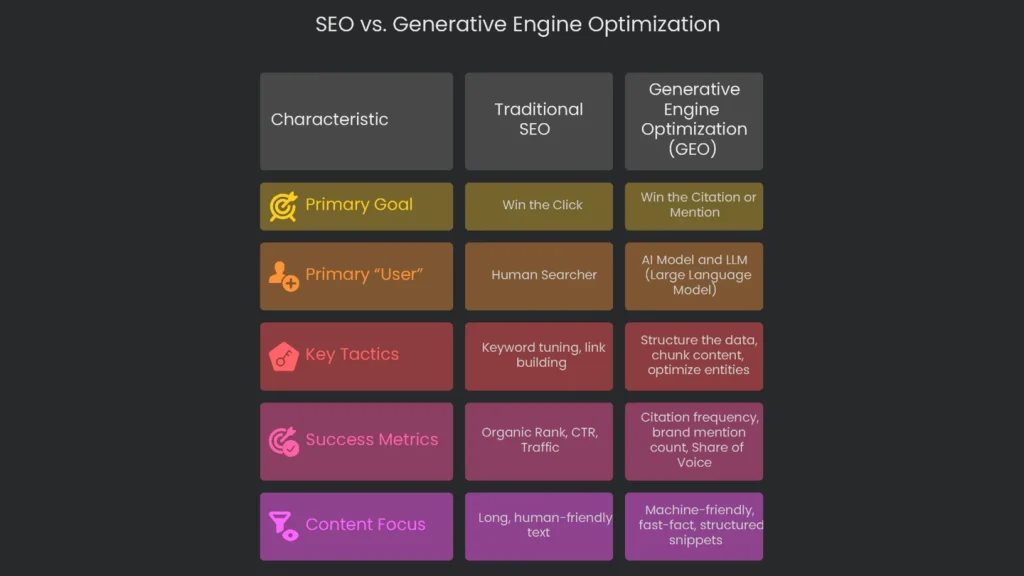
Sure, it feels like the usual ranking factors might be fading. However, they’re actually tightening. Data shows 99.5% of AI Overviews pull from the top 10 search results, and almost 80% spotlight a source that is in the top 3. So the summarized answer still craves its original page, and it demands the best citations first. That sets up a twist. AI Overviews can pull traffic away from those cited, yet the citation still came only because the original page ranked high. Therefore, the new GEO layer can’t skip standard SEO basics. An early citation is won by early ranking, and only rock-solid ranking gets you into the summary pool. The next table makes the comparison plain.
| Metric | Traditional SEO | Generative Engine Optimization (GEO) |
| Primary Goal | Win the Click | Win the Citation or Mention |
| Primary “User” | Human Searcher | AI Model and LLM (Large Language Model) |
| Key Tactics | Keyword tuning, link building | Structure the data, chunk content, optimize entities |
| Success Metrics | Organic Rank, CTR, Traffic | Citation frequency, brand mention count, Share of Voice |
| Content Focus | Long, human-friendly text | Machine-friendly, fast-fact, structured snippets |
The 3 Pillars of GEO
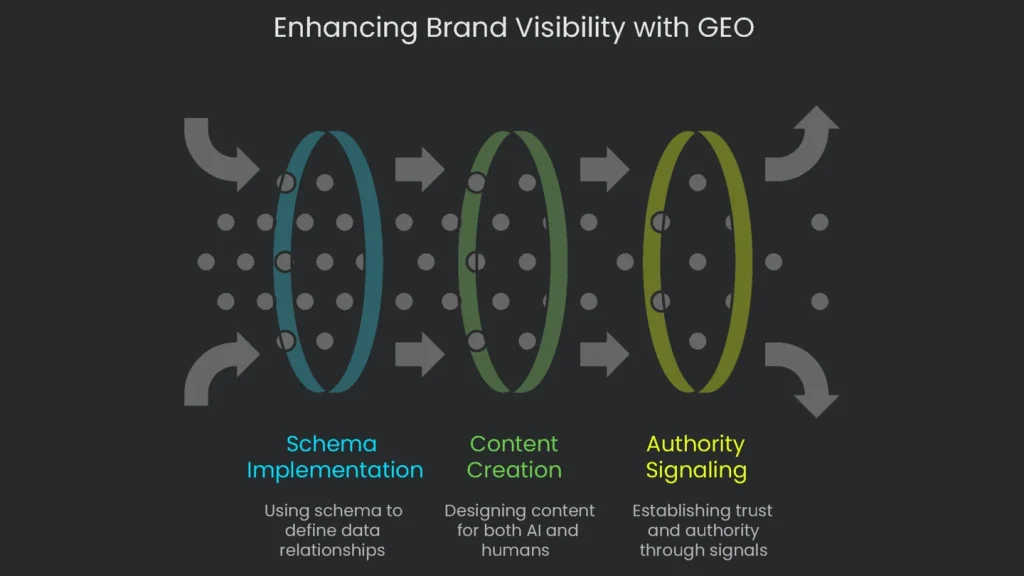
Generative Engine Optimization rests on three big ideas. Nail these, and your brand stays visible and trusted now that AI drives discovery. In short, structure your data, design content for both readers, and signal authority.
Structure Your Data
Schema and neat data blocks once earned a gold star in SEO class. Now they are the ticket that counts. AI tools don’t read pages top to bottom like we do. Instead, they swim through code and hunt for tidy, clear data. If you throw in a jumble of text and no logical tags, the AI shrugs and your facts stay hidden. Therefore, structured data becomes the secret handshake that tells the machine, “Here’s the important part—no guessing needed.”
Using fully connected and accurate schema is like handing AI a high-quality road map. It shows who you are, what you sell, and what you know. AI learns by spotting entities and how they link together. Without schema, the AI sees a jumble and must guess. That takes time and causes mistakes. When you lay out clear schema, the relationships pop into focus. As a result, your information looks tidy and trustworthy, and the AI recommends your site with confidence.
Some must-use schema types:
- Organization Schema: This is the backbone of your brand’s online face. Include your legal name, logo, and contact details in tidy boxes. The
sameAsproperty works like footnotes to credible profiles on LinkedIn or Wikipedia. Consequently, AI can double-check you’re a real brand in the real world. - Product Schema: If you run an online store, start here. Price, stock status, and global identifiers like GTINs must be crystal clear. This markup feeds AI summaries and comparison tables inside AI-powered shopping hints.
- FAQPage Schema: Think of this as secret sauce for GEO. It reshapes your info into questions with spot-on answers—the layout AI loves. When you add FAQPage schema, your page becomes a button the AI can press for a quick citation in an Overview.
Content for AI and People
GEO means writing for two readers: real humans and AI models. When the AI arrives, it doesn’t read the whole page. Instead, it slices text into tidy, meaningful chunks and pulls the best bits for an answer. Therefore, you must rethink page design. From titles to paragraphs, everything should say “pick me” to machines without dulling the human shine.
In this setup, every page acts like a human-friendly API. Think of the AI as a client that asks, “I need this.” When your GEO page uses question-style headings (like How does structured data help AI?), it becomes an API “endpoint.” The quick, data-packed chunk right under that question is the “response” the AI can copy in a blink. Consequently, you should architect these mini API calls—one clear fact block at a time.
Right now, what you say is as important as how you say it. AI tools scour public sources and excel at repeating widely known facts. To make your piece the source others cite, you must deliver Information Gain—what you alone add to the conversation.
Information Gain comes from a few moves:
- Publish original surveys, studies, curated social data, or your own project results. If it’s new, share it and cite your method.
- Share product tests. For example, document an unboxing, a service failure with timestamps, or the true cost of repairs.
- Synthesize fragmented facts into new patterns. Connect insights across disciplines and visualize how ideas fit together.
- Avoid generic explainers. Instead, add specific findings from your analysis. For example: “We reviewed 10,000 results and found five recurring GEO factors.”
For deeper ammo, read several posts on Generative-Engine Optimization tactics or study work from AI-savvy search strategists. Next, adapt the best ideas to your brand.
Authority and Trust Signals
Nowadays, AI can churn out endless articles, so proving your information is reliable is top priority. To dodge “hallucinations”—when a model invents facts—these systems favor sources with clear authority and trust. Google’s E-E-A-T rules explain how to earn that badge.
Here’s how it rolls. Solid authority earns links, and those links reinforce authority. A website builds E-E-A-T by featuring a known specialist who writes the piece and by adding Author markup to spotlight that expert. These signals push the page up in standard search. As a result, it becomes a top choice for AI summaries. The AI notes those E-E-A-T badges and includes the page in its overview. Consequently, the brand gains another authority badge from the search engine itself. This boost leads to even better rank, more links, and the cycle continues.
Action-ready signals authority wants:
- Site-Level Trust: Getting technical SEO right is the starting line. Use HTTPS, keep backlinks healthy, and refresh your “About Us” and contact pages. Each step builds the kind of trust robots need today.
- Author-Level Trust: This is your differentiator. Generic content is plain toast. Add Author or Person schema to every post with job title, employer, and links to social pages. Tie these to the
sameAsproperty. Consequently, robots can answer one question fast: “Who made this, and why is it solid?”
How to Launch GEO Now
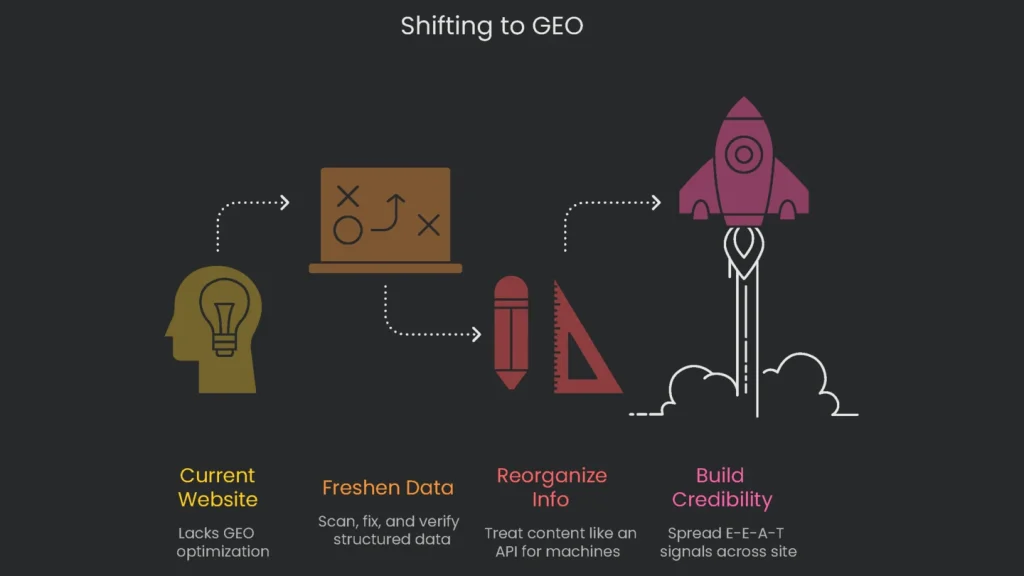
Shifting to GEO may feel daunting. However, a few small steps build altitude fast.
Freshen Your Structured Data
Kick off by checking what’s already live. Scan your site for structured data, note broken or missing fields, and plan quick wins for a cleaner finish.
- Verify with the Right Tools: Use the Rich Results Test and scan key templates. This shows what search engines see and flags markup issues.
- Start with Hottest Pages: Don’t try to fix everything at once. Begin with the pages that drive the most eyes or revenue. Then expand.
- Beef Up Core Records: Polish Organization markup and link to verified social and business profiles. If you run an online shop, ensure Product markup is complete on every SKU.
Reorganize Key Info
Identify top-ranking reference pages that already attract steady traffic. These pages are the front line for GEO restructuring and likely candidates for early AI Overview mentions.
- Treat Content like an API: Recast existing content to please machines. Turn headings into clear questions, and split long paragraphs into bite-size blocks with a single idea.
- Turn Long Text into Data: Convert narrative sections into lists, step sequences, or concise tables that map facts at a glance.
- Tag with FAQPage Schema: Link each Q&A block to FAQPage schema. This signal helps AI identify and cite your content with confidence.
Build Your Credibility
Spread E-E-A-T signals across your site so AI can spot your experience, expertise, authoritativeness, and trust at a glance.
- Use Author Schema: Mark each piece with Author schema. Each author should have a full bio page that links to verified professional profiles.
- Boost Openness: Polish “About Us” and contact pages. Clearly tell visitors and search engines who runs the site and why you’re the authority.
- Run a “Knowledge Boost” Audit: Review your top pages and add unique insights. Include original studies, expert quotes, or fresh research others will cite.
The Future is Answers
Why GEO Is the Logical Next Step
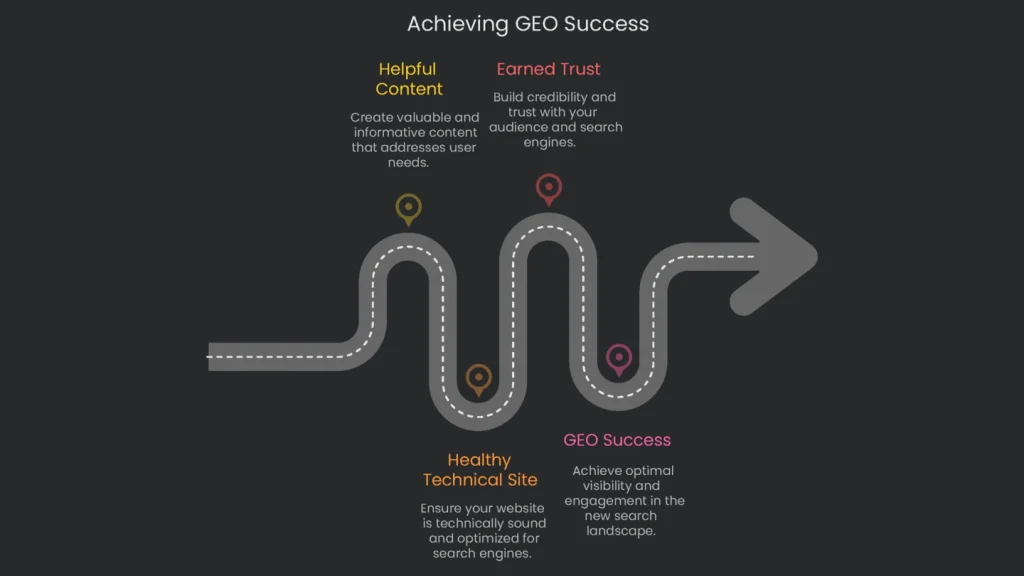
Generative Engine Optimization isn’t a new rule; it’s the next chapter. The pillars—helpful content, a healthy technical site, and earned trust—now form the foundation GEO needs. The way we search is changing fast. Soon, people will skip long lists of links and get straight, trusted answers. Therefore, the brands that win will write information AI trusts and repeats everywhere people search.
Partner With Experts
This shift is a major hurdle and a giant doorway to growth. At Technicalseoservice, we blend strategic foresight with technical know-how and guide you through the switch. The new search is live. As a result, we want your brand to be the one everyone follows.
Implementation steps
- Divide content into clear sections, each with cited facts and publication dates.
- Layer in relevant schema types—Article, FAQ, HowTo—and refresh pages with regular micro updates.
- Get AI-friendly originals online: tables, graphs, datasets.
- Build speedy, mobile-friendly pages to boost trust signals.
- Log when AI sites mention your work, spot missing info, and fill the gaps
Frequently Asked Questions
What’s GEO?
Structuring and writing so that AI answers spotlight your site correctly.
What do I spend my time on?
Clear headings, reliable data, schema, and up-to-date info.
Does GEO take the place of SEO?
Nope—it’s added to keep ranking and on-page visibility.
How do I measure GEO?
Watch our landing-page clicks, scan the AI mention scores, follow the brand search spikes, and map the referrer patterns.
Any risks?
The zero-click flash. Combat it with clear calls-to-action on each page and reasons no one else can list.